Google Pixel Android 17 update bugs are becoming a major talking point among Pixel owners in the USA, especially as more users install the latest software release. While Android 17 brings new features, security improvements, and Pixel-specific upgrades, many users are also reporting frustrating glitches after updating.
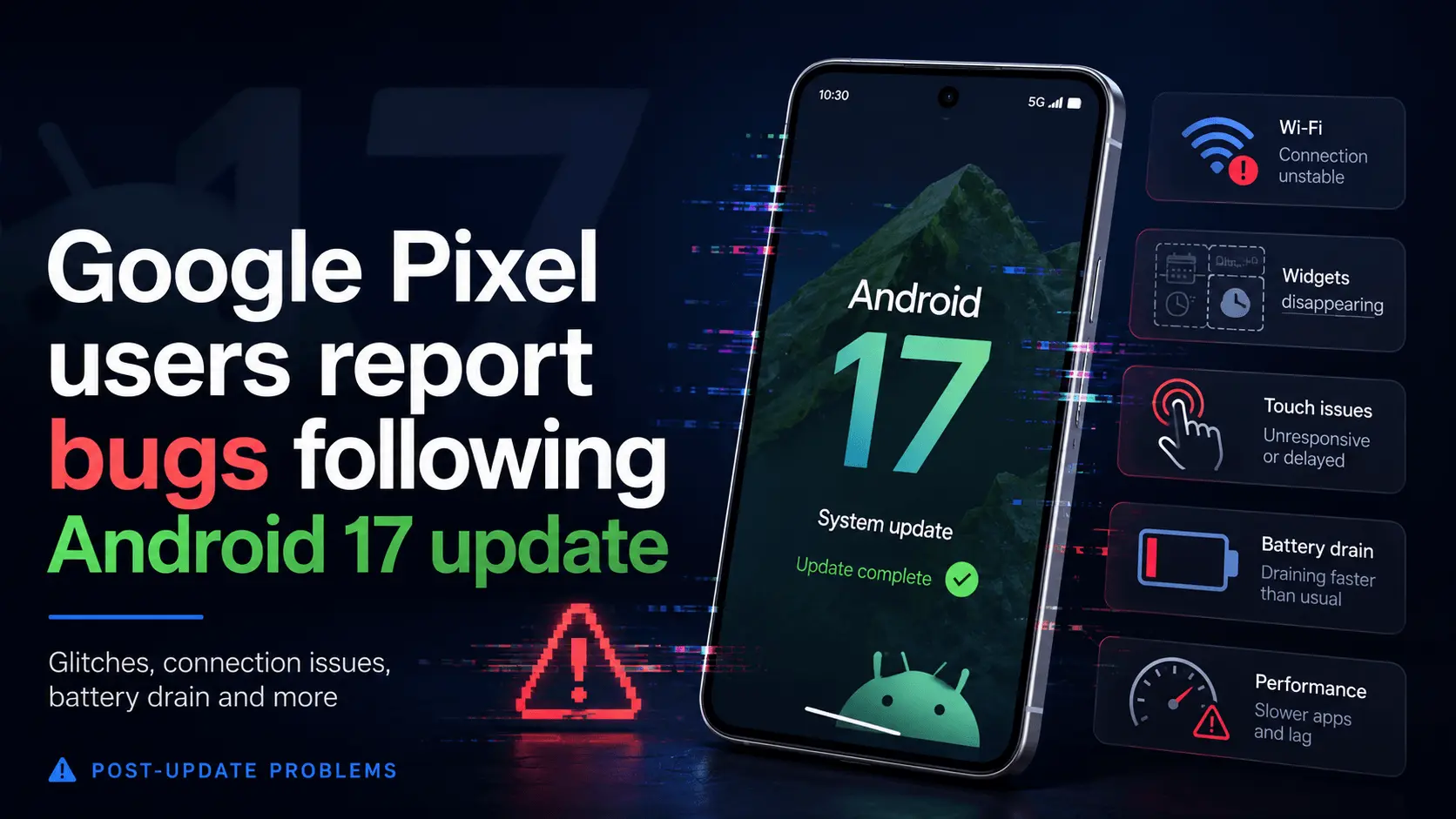
The complaints range from touchscreen delays and missing widgets to WiFi problems, 5G drops, app crashes, and performance hiccups. Not every Pixel phone is affected, but the number of Google Pixel users report bugs posts across forums, support pages, and tech communities has made this rollout worth watching closely.
For Pixel owners, the big question is simple: are these Android 17 Pixel bugs temporary launch issues, or signs of deeper Google Pixel update problems? Here’s a detailed look at what users are experiencing, which devices appear to be affected, and what you can do if your Pixel feels unstable after the update.
Google Pixel Users Report Bugs Following Android 17 Update
Major Android releases often come with early software issues, and Android 17 is no exception. Since the rollout began, users have described a mix of Pixel Android 17 issues that affect daily phone use.
Some complaints are minor, such as Pixel Launcher animation hiccups. Others are more serious, including Pixel touch input not working properly, Pixel apps not loading on WiFi, or Pixel 5G not working Android 17 after the update.
The most common reports include:
- Pixel touchscreen bug Android 17
- Pixel widgets disappeared Android 17
- Pixel WiFi bug Android 17
- Android 17 Pixel 5G problem
- Android 17 Pixel battery drain
- Pixel overheating Android 17
- Google Pixel lag after Android 17
- Pixel apps crashing after update
These Android 17 update issues appear to vary by device, carrier, app setup, and user profile configuration. That means one Pixel 9 Pro may run smoothly while another shows Android 17 Pixel performance issues within hours of installation.
Android 17 Pixel Bugs: What Users Are Seeing
Touchscreen and Scrolling Problems
One of the most disruptive Google Pixel Android 17 problems involves touch response. Some users say their phone briefly freezes, ignores taps, or reacts late after the Android 17 update.
Reports include Pixel touchscreen bug Android 17 complaints, Android 17 Pixel touchscreen issue posts, and cases where Pixel touch input not working makes everyday actions feel unreliable. For example, users may tap an app icon and see no response, or swipe through a feed only to experience a delay.
There are also reports of Pixel screen freezing Android 17, Pixel scrolling bug Android 17, Android 17 scrolling issue Pixel, and Pixel swipe bug Android 17. These issues can be especially annoying in messaging apps, browsers, social media apps, and games where fast touch response matters.
Display, Gesture, and Launcher Glitches
Beyond touch input, some users have described Pixel display issues Android 17. These include stutters, temporary freezes, and unusual gesture behavior.
Pixel gesture problems Android 17 may show up when swiping home, switching apps, or opening the recent apps screen. In some cases, the Google Pixel touch response issue appears tied to system animations or Pixel Launcher behavior.
This has also led to Pixel Launcher bug Android 17 complaints, Android 17 Pixel Launcher issues, and broader Google Pixel home screen bug reports. Some users say the home screen reloads unexpectedly or feels slower than it did on Android 16.
Pixel Widgets Disappeared After Android 17
Missing Home Screen Widgets
Another widely discussed issue is the Android 17 widget bug Pixel users are seeing after updating. Some Pixel owners report that widgets vanish from the home screen without warning.
This includes Pixel widgets disappeared Android 17, Pixel home screen widgets missing, and Google Pixel widget issue complaints. For users who rely on calendar, weather, notes, smart home, or productivity widgets, this is more than a cosmetic problem.
A real-world example is a Pixel user who keeps a work calendar widget on the first home screen. After updating, the widget disappears, forcing the user to reopen the calendar app manually before meetings.
Work Profile Widget Problems
A specific version of this bug appears to affect users with work profiles. Reports mention Pixel work profile widgets missing after the Android 17 update, especially when business apps are separated from personal apps.
This matters for professionals using managed devices or company apps. If work widgets disappear, users may miss calendar events, task reminders, approval alerts, or enterprise app notifications.
Related complaints include Android 17 home screen glitches, Pixel app icons missing Android 17, and Google Pixel post update issues involving launcher layout changes.
WiFi and Internet Problems on Pixel Phones
Apps Not Working on WiFi
Connectivity problems are another major theme in Android 17 Pixel update complaints. Some users say apps stop loading properly when the phone is connected to WiFi.
This has led to reports of Pixel WiFi bug Android 17, Android 17 WiFi issue Pixel, Google apps not working on WiFi Pixel, and Pixel internet problem after Android 17.
In practical terms, a user may open Gmail, YouTube, Google Maps, or a banking app while connected to home WiFi and find that the app behaves as if there is no internet connection. Switching to mobile data may temporarily solve the problem, which suggests the bug may involve how Android 17 handles certain network routes or app connectivity checks.
Broader Connectivity Bugs
Some users are also describing Android 17 connectivity bugs Pixel owners may notice across WiFi, cellular, and app-level networking.
Common phrases in user reports include:
- Pixel apps not loading on WiFi
- Pixel network issue Android 17
- Google Pixel WiFi connection problem
- Pixel mobile data issue Android 17
- Pixel connectivity problems Android 17
For remote workers, students, and travelers, these issues can be disruptive. A phone that cannot reliably switch between WiFi and mobile data can affect video calls, authentication apps, cloud backups, messaging, and navigation.
5G, LTE, eSIM, and Carrier Issues
Pixel Stuck on LTE After Android 17
Some of the more serious Google Pixel Android 17 errors involve cellular connectivity. Users have reported Android 17 Pixel 5G problem cases where the phone drops from 5G to LTE or cannot connect to 5G at all.
Searches and complaints around Pixel stuck on LTE Android 17, Pixel 5G not working Android 17, and Google Pixel LTE issue have increased as users compare network behavior before and after updating.
For example, someone in a strong 5G coverage area may notice that their Pixel now stays on LTE even after toggling airplane mode or restarting the phone. Others may see unstable signal strength or slower mobile data speeds.
eSIM and Carrier Complaints
Some users have also mentioned Pixel eSIM issue Android 17, Pixel signal problem after update, Android 17 mobile network problem, and Android 17 carrier issue Pixel.
In more severe cases, users may need to reset network settings, reconfigure an eSIM, or contact their carrier. However, users should be careful before deleting an eSIM profile, because reinstalling it may require carrier support.
A safer first step is a Google Pixel network reset Android 17 troubleshooting attempt through system settings. This can clear WiFi, Bluetooth, and mobile network settings, though users will need to reconnect to saved networks afterward.
Battery Drain, Overheating, and Performance Drops
Battery and Heat Complaints
Battery issues are common after large Android updates because the system may reindex files, optimize apps, and refresh background services. However, some users say Android 17 Pixel battery drain continues beyond the first day or two.
Related complaints include Pixel overheating Android 17 and Pixel slow after Android 17 update. A phone may feel warm while charging, during video calls, or when using navigation, even if it behaved normally before the update.
Not all battery drain is caused by the Android 17 update itself. A misbehaving app, outdated widget, VPN, carrier service, or background sync loop can also contribute.
Lag, Crashes, and Stability Issues
Some users are seeing Google Pixel lag after Android 17, Pixel performance drop Android 17, Android 17 app crash Pixel, and Pixel apps crashing after update.
There are also reports of Google Pixel restart issue Android 17, Android 17 system UI bug Pixel, and broader Pixel stability issues Android 17. These problems can show up as random reboots, frozen screens, delayed app launches, or System UI warnings.
A practical example: a user opens the camera quickly from the lock screen, takes a photo, then switches to Messages. If the phone freezes or restarts during that sequence, it points to the type of Pixel software update bugs that can affect real-world reliability.
Which Pixel Devices Are Reportedly Affected?
Reports vary, but complaints have mentioned both newer and older Pixel models. The most commonly discussed device-related searches include:
Pixel 9 Series
Pixel 9 Android 17 bugs and Pixel 9 Pro Android 17 issues are being discussed by users who expected a smoother experience on newer hardware. Some reports mention touch response, WiFi behavior, app crashes, and network problems.
Pixel 8 Series
Pixel 8 Android 17 bugs, Pixel 8 Pro Android 17 problems, and Pixel 8a Android 17 issues appear in user discussions around WiFi, widgets, scrolling, and performance. Since the Pixel 8 lineup remains widely used in the USA, these complaints are getting attention.
Pixel 7 Series
Pixel 7 Android 17 bugs and Pixel 7 Pro Android 17 problems include performance slowdowns, connectivity problems, and post-update stability issues. Older hardware can sometimes show update-related issues more clearly, especially when storage is nearly full or many background apps are installed.
Pixel Fold and Pixel Tablet
Pixel Fold Android 17 issues and Pixel Tablet Android 17 bugs are also worth watching because foldables and tablets use different layouts, multitasking features, and display behavior. Android 17 includes improvements for larger screens, but that also means more room for interface-specific glitches.
Broader Pixel Device Complaints
Overall, Google Pixel devices Android 17 problems do not appear limited to one model. Instead, the pattern suggests a mix of device-specific, carrier-specific, and app-specific bugs.
Why Android Updates Can Cause Pixel Bugs
Android updates are complex because they touch almost every part of the phone. A major update can change the kernel, modem firmware, graphics behavior, launcher, app permissions, background processes, and power management.
That is why Pixel bugs after Android update releases are not unusual, even on Google’s own hardware. Pixel phones receive updates quickly, which is great for security and features, but it also means early adopters may encounter bugs before a wider fix arrives.
In the case of Android 17 update problems Pixel users are reporting, the affected areas point to several possible categories:
- Input handling and display responsiveness
- Launcher and widget management
- WiFi and cellular network handling
- App compatibility after system changes
- Background battery and thermal behavior
- Carrier provisioning and eSIM behavior
From an industry perspective, this is why staged rollouts matter. They allow Google to spot patterns before every user receives the same update.
What to Do If Your Pixel Has Android 17 Problems
Restart and Update Apps First
Start with the basics. Restart your Pixel, then open the Play Store and update all apps. Many app crashes after a system update are fixed by app-side compatibility patches.
This can help with Android 17 app crash Pixel complaints, Pixel apps crashing after update, and some Pixel Android update glitches.
Check for System Updates
Go to Settings, then System, then Software updates. Google often follows major Android releases with smaller patches that fix known bugs.
If your phone is experiencing Pixel Android 17 known issues, a monthly security patch or Pixel Feature Drop may resolve the problem.
Reset Network Settings
For Android 17 WiFi issue Pixel, Pixel cellular data bug, or Pixel stuck on LTE Android 17 complaints, try resetting network settings.
This may help with:
- Pixel internet problem after Android 17
- Pixel mobile data issue Android 17
- Pixel signal problem after update
- Google Pixel WiFi connection problem
- Android 17 mobile network problem
Remember that this removes saved WiFi networks and Bluetooth pairings, so keep passwords nearby.
Remove and Re-Add Problem Widgets
If your Pixel home screen widgets missing issue continues, remove the affected widget and add it again. Users with work profiles may need to check whether the app is installed in the personal profile, work profile, or both.
This may help with:
- Pixel widgets disappeared Android 17
- Pixel work profile widgets missing
- Android 17 Pixel Launcher issues
- Android 17 home screen glitches
Boot Into Safe Mode
Safe Mode can help determine whether a third-party app is causing Pixel performance drop Android 17 issues. If the phone works normally in Safe Mode, an installed app may be the source of the bug.
This is useful for diagnosing battery drain, overheating, app crashes, and launcher problems.
Report the Bug to Google
If the issue continues, report it through the Pixel support app or Android feedback tools. Include your Pixel model, carrier, Android build number, and a clear description of the problem.
Better bug reports help Google identify patterns faster, especially for Google Pixel bug reports Android 17 involving network, touch, or launcher behavior.
Should You Install Android 17 on Your Pixel Now?
If you rely on your Pixel for work, travel, medical apps, banking, or two-factor authentication, it may be smart to wait a little longer before updating. Early reports show enough Android 17 update problems Pixel users should take seriously.
However, if you already updated and your phone works fine, there is no need to panic. Many Pixel owners are reporting smooth performance, and the bugs do not affect every device.
A good rule is simple: if your Pixel is mission-critical, wait for the first post-launch patch. If you enjoy new features and can tolerate minor bugs, Android 17 may still be worth installing.
Expert Insight: The Bigger Pixel Update Challenge
Pixel phones are supposed to deliver the cleanest Android experience, but they are also the first devices to receive major Android updates. That gives Pixel users fast access to new features, but it also exposes them to early software problems.
The current Google Pixel Android 17 problems show how difficult modern mobile software has become. A single update has to work across multiple Pixel generations, carriers, app ecosystems, work profiles, eSIM setups, foldable layouts, and tablets.
That complexity explains why Pixel update causing problems does not always mean the update is broken for everyone. It often means certain combinations of hardware, carrier settings, apps, and user profiles are triggering bugs that were not caught at scale before release.
FAQ
1. What are the most common Google Pixel Android 17 update bugs?
The most common reports include touchscreen lag, scrolling problems, missing widgets, WiFi issues, 5G dropping to LTE, battery drain, overheating, app crashes, and Pixel Launcher glitches.
2. Which Pixel phones are affected by Android 17 bugs?
Reports mention several models, including Pixel 9, Pixel 9 Pro, Pixel 8, Pixel 8 Pro, Pixel 8a, Pixel 7, Pixel 7 Pro, Pixel Fold, and Pixel Tablet. However, not every device is affected.
3. How do I fix Pixel WiFi problems after Android 17?
Start by restarting the phone and router, updating apps, forgetting and reconnecting to the WiFi network, and resetting network settings. If apps only fail on WiFi but work on mobile data, report the issue to Google.
4. Why did my Pixel widgets disappear after Android 17?
The widget issue appears to affect some home screen setups, especially users with work profiles. Removing and re-adding widgets may help, but some users may need to wait for a Google patch.
5. Should I wait before installing Android 17 on my Pixel?
If your Pixel is essential for work, travel, or daily business tasks, waiting for the next patch is a cautious choice. If you already updated and your device works normally, you can continue using it while watching for future fixes.
Conclusion
The Android 17 rollout brings useful new features, but the early bug reports show that some Pixel users are dealing with real post-update problems. The most notable complaints involve touch response, scrolling, widgets, WiFi, 5G, LTE, eSIM behavior, battery drain, overheating, app crashes, and launcher stability.
For now, the best approach is practical. Keep apps updated, install new system patches when available, reset network settings if connectivity breaks, and report repeatable bugs to Google.
Most Android 17 Google Pixel glitches should improve as patches arrive. Still, if you have not updated yet and your Pixel is critical for work or travel, waiting for the next maintenance release may save you from unnecessary frustration.