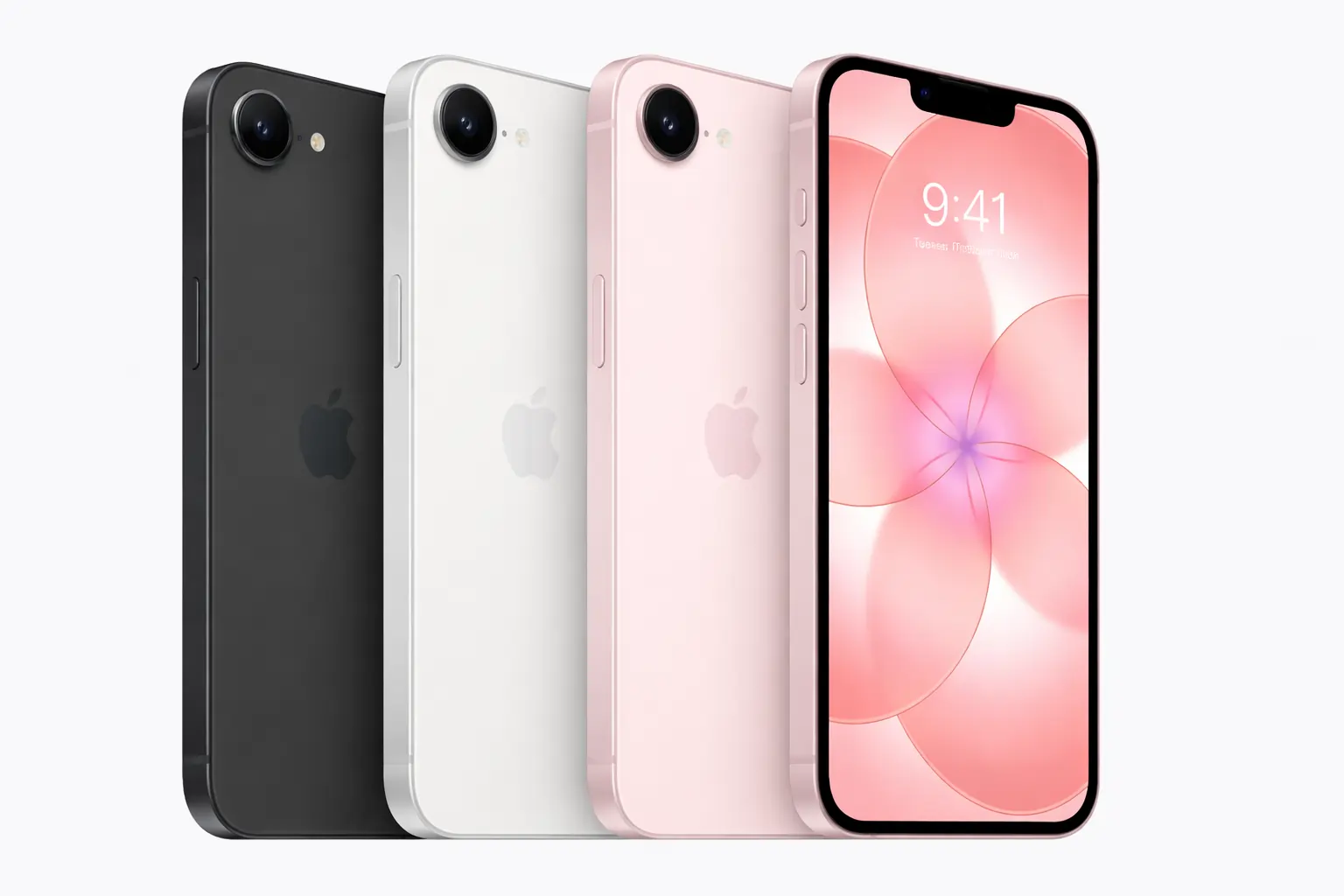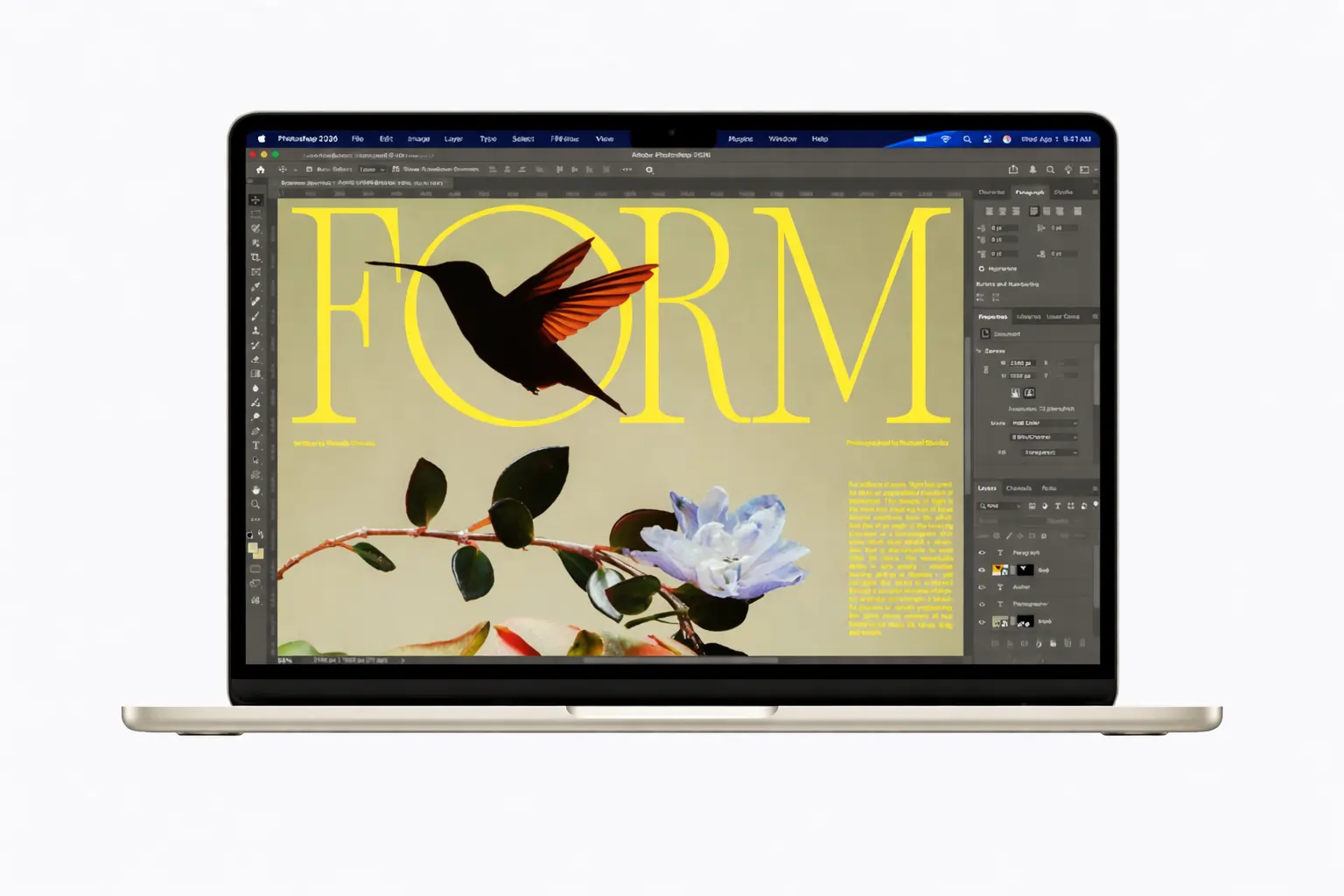
Apple has introduces a redesigned MacBook Air powered by its new Apple silicon M5 processor, marking the company’s most aggressive push yet to position the Air as an AI-first laptop. Pre-orders open March 4, with shipments beginning later this month.
The update is significant. The MacBook Air now ships with 512GB of base storage, double the previous entry configuration. It also introduces Wi-Fi 7 connectivity and a new N1 wireless chip, bringing Apple’s most popular notebook closer to its Pro siblings in performance and networking capability.
At the center is the Apple silicon M5. The system-on-chip features a 10-core CPU laptop architecture and a next-generation GPU MacBook design with hardware-accelerated ray-tracing engine performance. Apple claims measurable gains in M5 chip performance across creative workloads and on-device AI tasks, as detailed in the official Apple Newsroom announcement.
The CPU combines high-performance and efficiency cores built on an advanced fabrication process. Early benchmarks indicate faster single-threaded responsiveness and sustained multi-core output under heavy loads. The fanless aluminum design remains intact, signaling thermal efficiency improvements over the prior generation.
Graphics performance sees a more dramatic lift. The GPU integrates dynamic caching and enhanced ray tracing. This narrows the gap between the MacBook Air and entry-level MacBook Pro models for tasks such as 3D rendering, video editing, and gaming.
AI is the headline feature. The M5 includes an upgraded Neural Accelerator designed to handle generative and multimodal AI workloads locally. Apple is positioning the system as a true AI-powered laptop, capable of processing language models, image generation, and automation tasks without continuous cloud reliance.
The Neural Accelerator is tightly integrated with Apple Intelligence AI tools embedded in macOS Tahoe features. These tools extend system-wide writing assistance, image editing, contextual search, and workflow automation. Processing occurs on-device where possible, reinforcing Apple’s privacy-first posture.
Memory bandwidth rises to 153GB/s unified memory bandwidth, enabling smoother multitasking and faster AI inference. Configurations scale up to 4TB configurable storage, targeting creative professionals who previously outgrew the Air line.
The 512GB base model MacBook Air also benefits from faster SSD performance. Read and write speeds have increased, reducing export times for large video files and speeding up app launches.
Connectivity has been modernized. The laptop now supports Wi-Fi 7 laptop standards, promising lower latency and higher throughput on compatible networks. Bluetooth 6 connectivity is included for improved accessory stability and energy efficiency.
The new N1 wireless chip coordinates wireless functions and improves signal reliability in congested environments. This move mirrors Apple’s custom silicon strategy seen across its broader ecosystem.
Externally, the design remains familiar. The Liquid Retina display 13-inch model and the 15-inch MacBook Air retain slim bezels and high brightness levels. Color accuracy continues to target photographers and content creators.
Apple has upgraded the webcam to a 12MP Center Stage camera. The feature uses machine learning to keep users centered during video calls. It reflects the hybrid work reality that now defines laptop usage patterns.
Audio performance also advances. Spatial Audio speakers deliver wider sound staging. The system supports immersive playback and clearer voice reproduction during conferencing.
Battery endurance remains a selling point. Apple rates the device as an 18-hour battery life laptop under mixed usage. Efficiency gains from the M5 chip help maintain all-day performance without active cooling.
Port selection includes Thunderbolt 4 ports and dual external display support. This addresses a long-standing limitation of earlier base models that supported only a single external display.
The MacBook Air continues to straddle consumer and professional segments. Education pricing MacBook Air options aim to secure student adoption. At the same time, performance upgrades target creative professionals who prioritize portability over maximum horsepower.
Industry analysts view the M5 launch as strategic. The broader PC market is pivoting toward AI-native computing, with rivals integrating dedicated NPUs and hybrid processing architectures. Apple’s vertically integrated approach allows it to tune hardware and software simultaneously.
The risk lies in expectations. As generative AI workloads grow more complex, local processing limits will be tested. Cloud-based AI services still dominate high-end inference. Apple’s bet is that a significant share of daily AI tasks can be executed on-device.
For investors, the update reinforces Apple’s silicon roadmap discipline. Annual chip iterations maintain performance leadership while controlling supply chains. The shift to higher base storage also lifts average selling prices without overt price hikes.
For users, the implications are clearer. The MacBook Air is no longer a lightweight compromise. It is evolving into a mainstream AI workstation that balances portability, battery life, and serious computational capability.
With MacBook Air pre-order March 4 introduces, the company is signaling confidence in demand. If adoption matches prior cycles, the M5 generation could redefine what consumers expect from a thin-and-light notebook.
The MacBook Air has long been Apple’s volume leader. With the M5, it becomes the company’s most accessible AI computing platform to date.