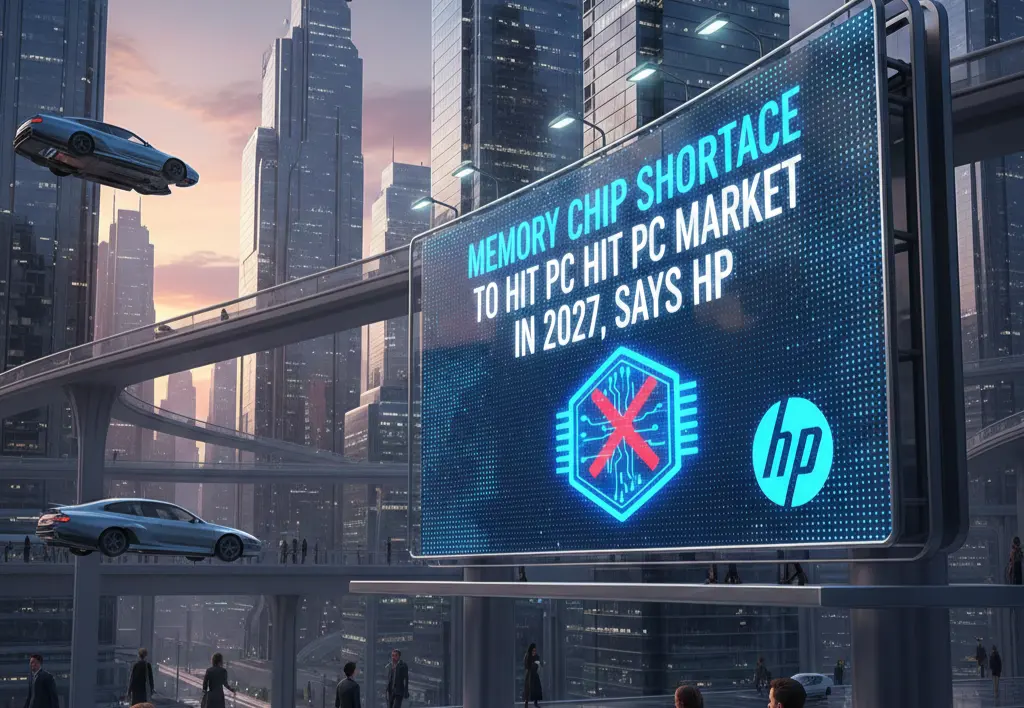
HP Inc is warning that a global memory chip shortage will linger well into 2027 and trigger a sharp downturn in the PC market. The world’s second-largest PC maker told investors that escalating DRAM and NAND supply constraints — driven by structural shifts in the semiconductor supply chain — are poised to reduce personal computer sales, squeeze margins, and slow industry growth.
HP said volatile memory pricing and constrained supply will persist through its fiscal 2026 cycle and likely into fiscal 2027, complicating its financial outlook and PC shipment trends. The company now expects double-digit declines in PC unit shipments as elevated amounts of DRAM and NAND chip capacity are absorbed by high-margin AI data-center production.
Executives highlighted that memory costs have dramatically reshaped PC cost structures. RAM and storage now account for roughly 35 percent of the bill of materials for HP systems — about double the share seen a year ago — creating relentless pressure on pricing, configurations, and OEM margins. Source
The semiconductor supply issues at the heart of HP’s forecast reflect broader ecosystem dynamics. Major memory producers such as Samsung, SK Hynix, and Micron have shifted a growing share of wafer capacity toward high-bandwidth memory (HBM) for AI accelerators and cloud infrastructure. That reallocation has tightened availability of commodity DRAM and NAND used in laptops and desktops, pushing prices sharply higher and leaving consumer computing behind in allocation priorities. Source
Industry analysts corroborate HP’s concerns. Market research suggests that memory scarcity and elevated pricing could force PC makers to raise device prices or reduce spec levels to preserve margins. Some forecasts even anticipate that PC shipments could fall to pre-pandemic lows if the imbalance persists. Source
The memory crunch is not isolated. Contract pricing for DRAM and NAND products has surged dramatically as demand outstrips supply, particularly where AI infrastructure spending corners future wafer bookings. This supply/demand imbalance has sparked relentless escalation in memory spot prices, fueling cost inflation for OEMs and complicating inventory planning across the tech supply chain. Source
HP’s warning comes amid a backdrop of macroeconomic and policy headwinds. The company has also cited rising US trade regulations and tariffs that add further volatility to its cost base, while competitors such as Dell and Lenovo signal similar market pressures. Source
For end users, the implications are tangible. Elevated memory costs typically translate into higher PC prices, slower refresh cycles, and reduced choices — particularly in lower and mid-tier segments where memory is a significant cost component. Businesses may delay upgrades, and consumer adoption could soften as alternatives like tablets and cloud-based services gain relative value.
Investors are already reacting. HP’s shares dipped on the news as markets digested the implications for profit margins and demand patterns. Analysts caution that if memory constraints and pricing volatility remain entrenched, the broader PC market could enter a protracted contraction before relief arrives. Source
Looking ahead, capacity expansions from memory manufacturers are underway but slow to materialize. New fabrication facilities take years to reach volume production. As a result, the current DRAM and NAND supply constraints may not fully ease until late 2027 or beyond, leaving PC makers to navigate a challenging landscape in the near term. Source