Dell’s latest earnings report offers a masterclass in the double-edged nature of the artificial intelligence revolution. The company delivered quarterly results that smashed Wall Street expectations, driven almost entirely by insatiable demand for AI infrastructure. Revenue for the fiscal fourth quarter of 2026 hit new highs, propelled by a surge in sales of high-end servers packed with NVIDIA’s latest graphics processing units

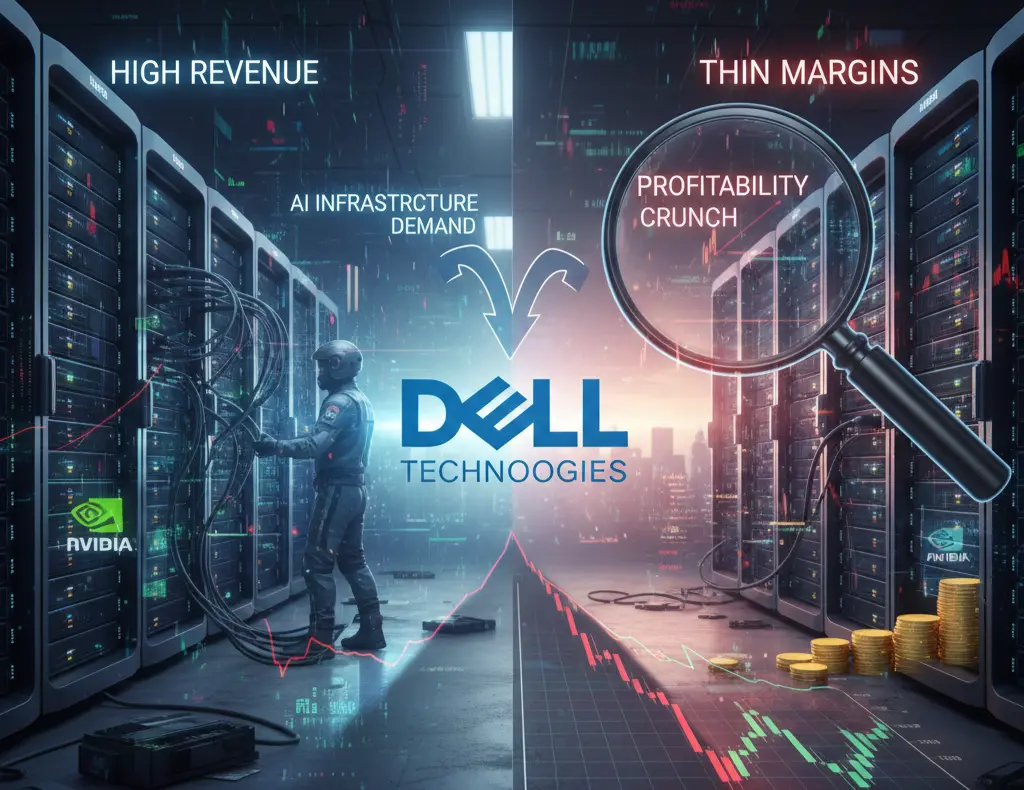
Image: AI infrastructure demand is driving explosive growth for server manufacturers like Dell Technologies.
This is the clearest signal yet that the AI boom is translating into tangible hardware revenue. Businesses are not just experimenting with large language models; they are scrambling to build the computational backbone required to run them. Dell, as a primary vendor for this infrastructure, is a direct beneficiary. Its Infrastructure Solutions Group saw explosive growth, a stark contrast to the stagnant PC market that once defined the company.
Yet the report, released after the market close, sent Dell’s stock on a volatile ride. The initial surge gave way to sharp declines in after-hours trading. The reason was a single, critical line item buried in the financials: profitability. While AI server revenue is skyrocketing, the margins on those machines are razor-thin.
Dell is engaged in a high-stakes volume game. To secure the coveted NVIDIA chips, it must commit to massive orders, passing them along to hyperscale cloud providers and deep-pocketed enterprises. This dynamic creates a significant bottleneck. The company is effectively trading margin for market share in a race to dominate the AI hardware space before competitors like HPE and Super Micro Computer solidify their positions.
The market’s mixed reaction underscores a growing investor skepticism. The euphoria over AI adoption is now tempered by a hard look at the economics. For every dollar spent on NVIDIA’s dominant GPUs, a significant portion flows through hardware assemblers like Dell, leaving them with single-digit margins and inventory risks. If AI demand fluctuates or if custom silicon from cloud giants reduces reliance on NVIDIA’s standard-bearer chips, Dell’s infrastructure business could face a sudden margin crunch.
Conversely, the report highlighted the widening gap between AI-driven growth and the rest of the technology sector. Dell’s Client Solutions Group, which handles PCs, showed only modest recovery. This indicates that enterprise IT spending remains bifurcated. Budgets are being aggressively reallocated to AI and data center expansion, often at the expense of traditional hardware refreshes and software upgrades.
The company’s forward guidance attempted to address these concerns. Executives pointed to a robust pipeline of AI server orders stretching into the next fiscal year, suggesting the current demand curve has not yet peaked. They emphasized the long-term potential of the “AI factory” concept, where enterprises build their own private infrastructure to run proprietary models. This strategy positions Dell as the architect of the corporate AI backbone, moving beyond simple box shifting.
Partnerships remain central to this vision. Dell’s deep integration with NVIDIA extends beyond mere component purchasing. The companies are co-developing reference architectures for enterprise AI deployments, making it easier for corporations to buy and implement turnkey AI systems. This relationship is Dell’s strongest moat against competitors trying to encroach on its data center turf.
However, the risks for investors are structural, not cyclical. The AI boom currently benefits the component makers—namely NVIDIA—more than the system integrators. Dell is navigating a classic innovator’s dilemma: it must chase the high-revenue, low-margin AI server business to stay relevant, while hoping that the eventual saturation of data centers leads to a higher-margin services and storage upgrade cycle.
Storage, in fact, represents a hidden leverage point. As AI models generate and consume unprecedented amounts of data, the need for high-performance storage solutions to feed those GPU clusters becomes critical. Dell’s extensive portfolio in this area, recognized by analysts at firms like Gartner, could become a major profit driver in the later stages of the AI build-out, a nuance that patient investors are starting to recognize.
The broader implication for the tech sector is clear. Earnings reports will increasingly be parsed not just for AI revenue, but for AI profitability. The market is maturing, moving from the speculative phase of “who is buying chips” to the rigorous phase of “who is making money selling the pickaxes.” Dell’s quarter perfectly encapsulates this transition.
For now, the company is riding a wave of unprecedented demand for computing power. The challenge is to convert that wave of revenue into sustainable, profitable growth. The coming quarters will reveal whether Dell can build a high-margin business atop the low-margin foundation of AI servers, or if it will remain a high-volume conduit for someone else’s technological revolution. The answer will define its future and serve as a barometer for the entire AI hardware ecosystem.